Planning a Timber Fence in Brisbane
A useful timber-fence quote starts before anyone talks about a rate per metre. Style, height, removal, access, slope, gates and adjoining retaining can change both the work and the result. The clearer those details are, the faster a contractor can assess whether the scope is a good fit.
Choose the job the fence needs to do
Privacy, security, presentation, pet containment and screening can point toward different heights, styles and details. Start with the outcome rather than selecting a fence from one finished photo.
A side boundary may need a practical paling system. A visible front boundary may justify a more detailed batten rhythm or matching gate. Where the fence sits above retaining, the wall and fence should be considered together.
- Which views need screening
- Whether both sides of the fence matter visually
- Any gates, returns or changes in height
- What meets the fence at each end
- Whether planting, retaining or concrete is planned nearby
Paling, lapped and capped, or feature timber
Standard timber paling fencing is a practical choice for many Brisbane side and rear boundaries. Lapped-and-capped construction creates more overlap and a stronger finished top line where privacy and presentation carry more weight.
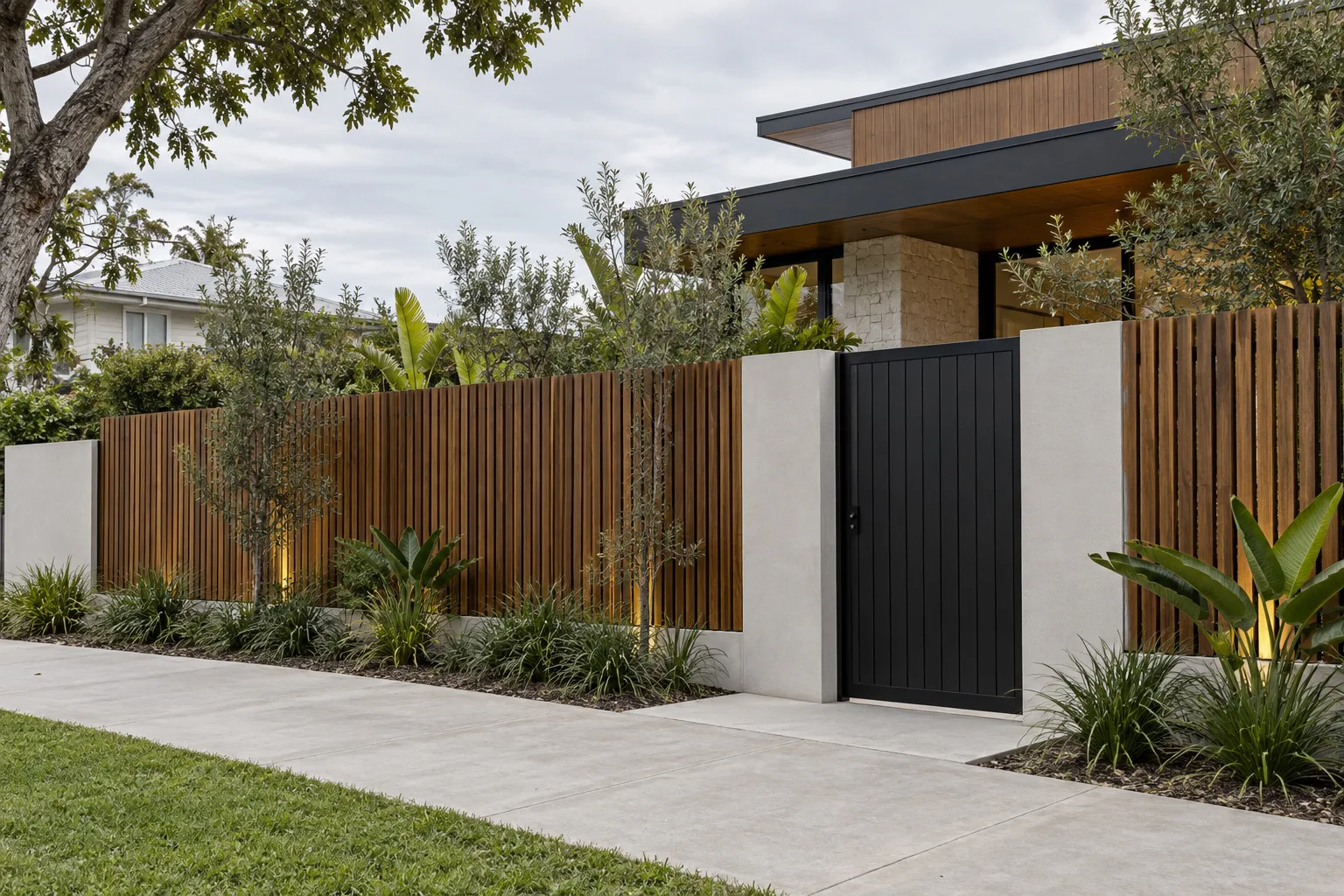
Feature battens and custom screens can suit frontages, courtyards and selected privacy applications. They generally involve more material, layout and finishing decisions, so they should be quoted as a distinct scope rather than compared directly with a standard paling fence.
Treated pine and hardwood are not the same quote
Timber species and treatment affect cost, weight, appearance, maintenance and how components are specified. A quote that simply says “timber fence” leaves an important decision unresolved.
Ask what is proposed for posts, rails, palings and any visible feature sections. The right combination depends on the finish you want, the site and the investment you are comfortable making.
The site factors behind the price
A headline rate per metre rarely describes the complete job. Removal, disposal, access, height, slope, gates, ground conditions and transitions can materially change labour and materials.
Good photos and approximate measurements help identify these factors before a visit. They do not replace a final site check where levels, boundaries or existing structures remain unclear.
- Total length and required height
- Level, stepped or sloping boundary
- Existing fence removal and waste access
- Gate sizes and hardware expectations
- Retaining walls, garden beds and built-up ground
- Narrow side access, stairs or shared driveways
Know when repair stops making sense
A few loose palings or an isolated hardware issue may suit a focused repair. When multiple posts, rails and sections are deteriorated or leaning, repeated local repairs can become a poor substitute for replacement.
Photograph the whole run as well as the obvious fault. That wider view helps separate a Care & Restore repair from a full timber-fencing replacement enquiry.
Prepare a quote-ready enquiry
Send the suburb, approximate length and height, wide photos of the full boundary, close-ups of the ground and existing structure, access photos, and the style or outcome you prefer.
If you are unsure about timber or finish, say so. An honest “unsure” is more useful than guessing, provided the site information and desired outcome are clear.
Questions
Is timber fencing suitable for a sloping Brisbane block?
It can be, but the fence may need to be stepped or follow the grade. Slope, finished heights and the ground line should be shown clearly in the enquiry photos.
Should I repair or replace my timber fence?
Local damage may suit repair when the posts, rails and surrounding sections remain sound. Widespread movement or deterioration can make full replacement the more practical pathway.
Can a timber fence include a matching gate?
Yes. Include the opening width, intended use and clear photos so the frame, hardware, clearances and finish can be considered with the fence.